You hold thousands of beliefs. About money, about love, about what you deserve, about what happens if you fail, about whether the world is safe. Here is the strange part: you consciously chose almost none of them. This article is about where they actually came from, why they defend themselves so well, and the quietly hopeful science of how they change.
Beliefs are conclusions, and the earliest tend to run deepest
A belief is not a decoration on the mind. It is a conclusion, drawn from experience, and the mind draws them at every age of your life. The reason so much attention falls on childhood is that the earliest conclusions tend to sit deepest: clinicians have long observed that our core beliefs about ourselves and the world are typically laid down early, when the mind is working urgently through the biggest questions it will ever face (Beck, Cognitive Therapy and the Emotional Disorders, 1976): what do I need to do to be safe here? What earns love in this family? Where do I belong, and what threatens that? A child answers with whatever evidence childhood happens to supply, and the answers get stored, not as opinions, but as facts about how the world works.
And the writing never stops. A brutal boss, a betrayal, a failure that played out in public: experiences like these can install a conclusion at thirty-five as surely as at five, especially when they are intense, repeated, or land on top of something already there. Adulthood mostly adds layers to the early foundations, which is why a new wound so often carries an old echo. Wherever a belief was written, though, the mechanics that follow are the same.
That is why so many core beliefs feel less like thoughts and more like weather. You never sat down and decided that being seen is dangerous, or that rest must be earned, or that you are somehow behind. An earlier you concluded it, from something real, and has been living by it ever since. The conclusion made sense where it was drawn. The question is whether it still describes the life you are in now.
Then the belief starts collecting evidence
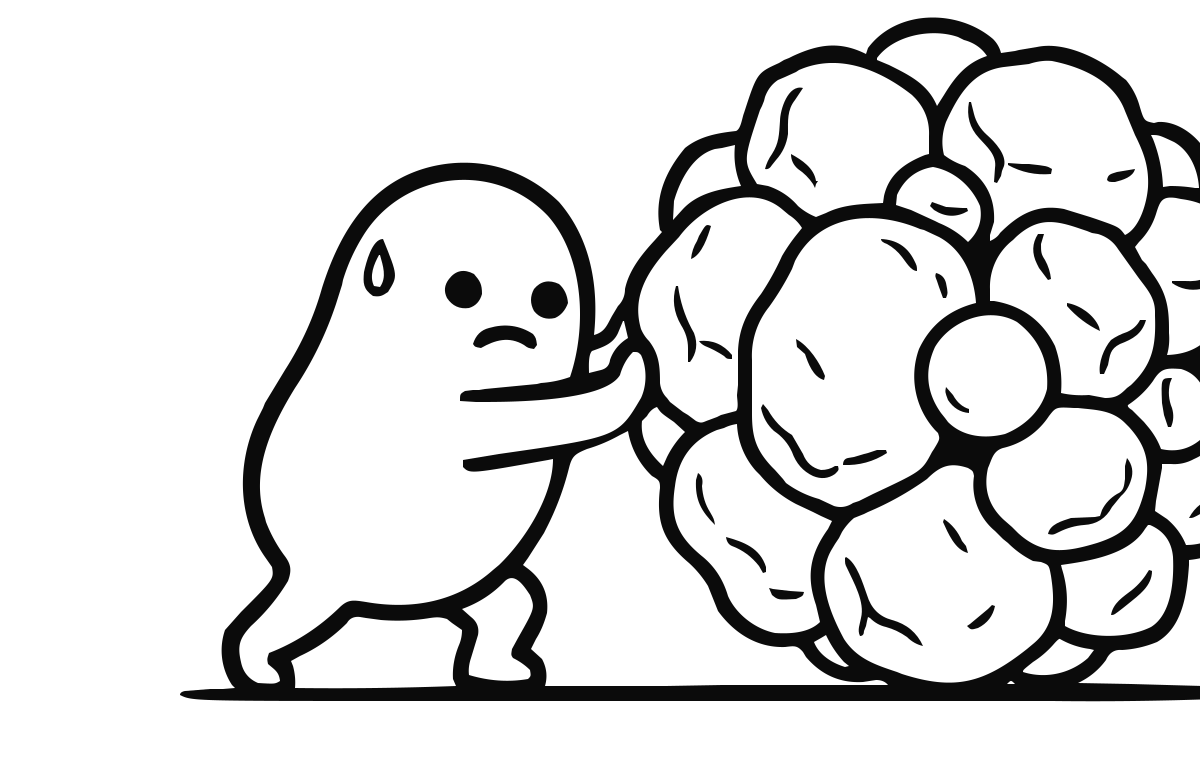
Once stored, a belief goes to work, and its first job is editing what you see. We notice, favour and remember whatever fits what we already hold to be true, and quietly discount the rest (Nickerson, Review of General Psychology, 1998). The modern picture goes further still: the brain behaves like a prediction machine, using what it believes to shape what it actually perceives (Clark, Behavioral and Brain Sciences, 2013). A belief does not sit in your head waiting to be tested. It goes out and builds its own case, every day, from your own life.
Which explains the thing everyone eventually notices: you cannot usually argue someone out of a deep belief, including yourself. The argument arrives in words, at the surface. The belief lives deeper, written in experience and feeling, holding a folder of hand-picked evidence. Debate was never its language.
The quietly good news
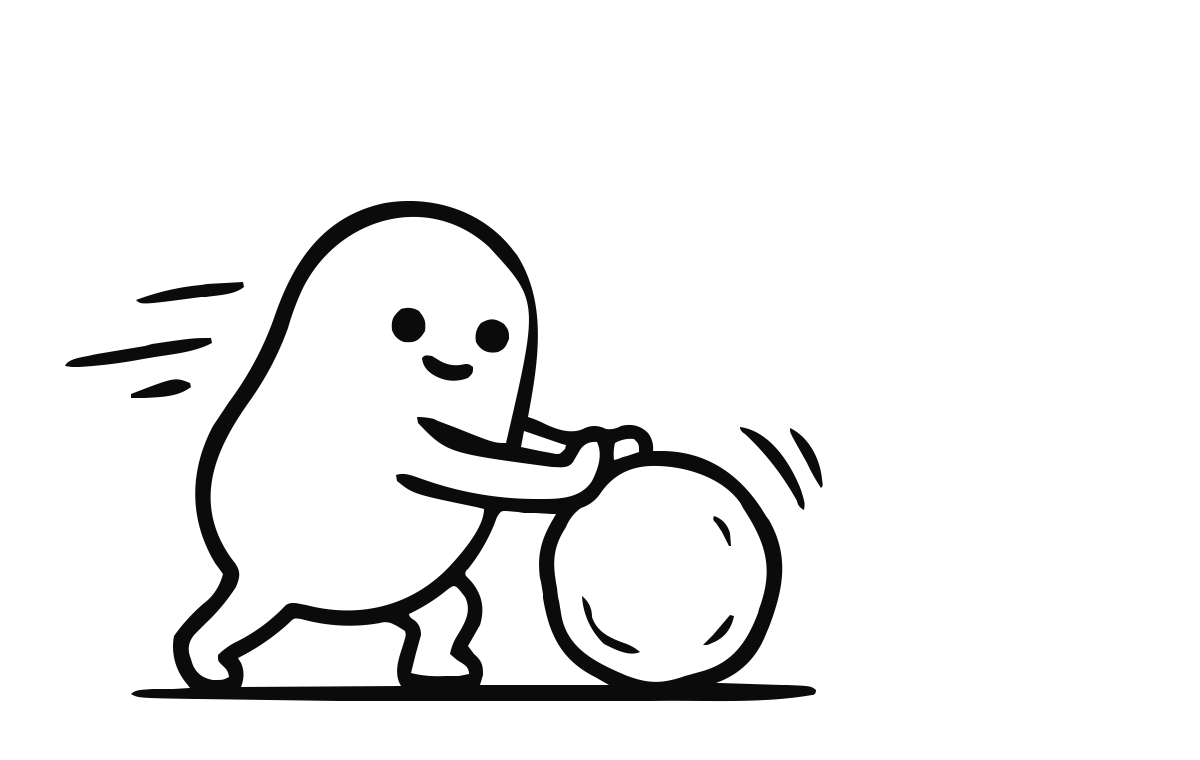
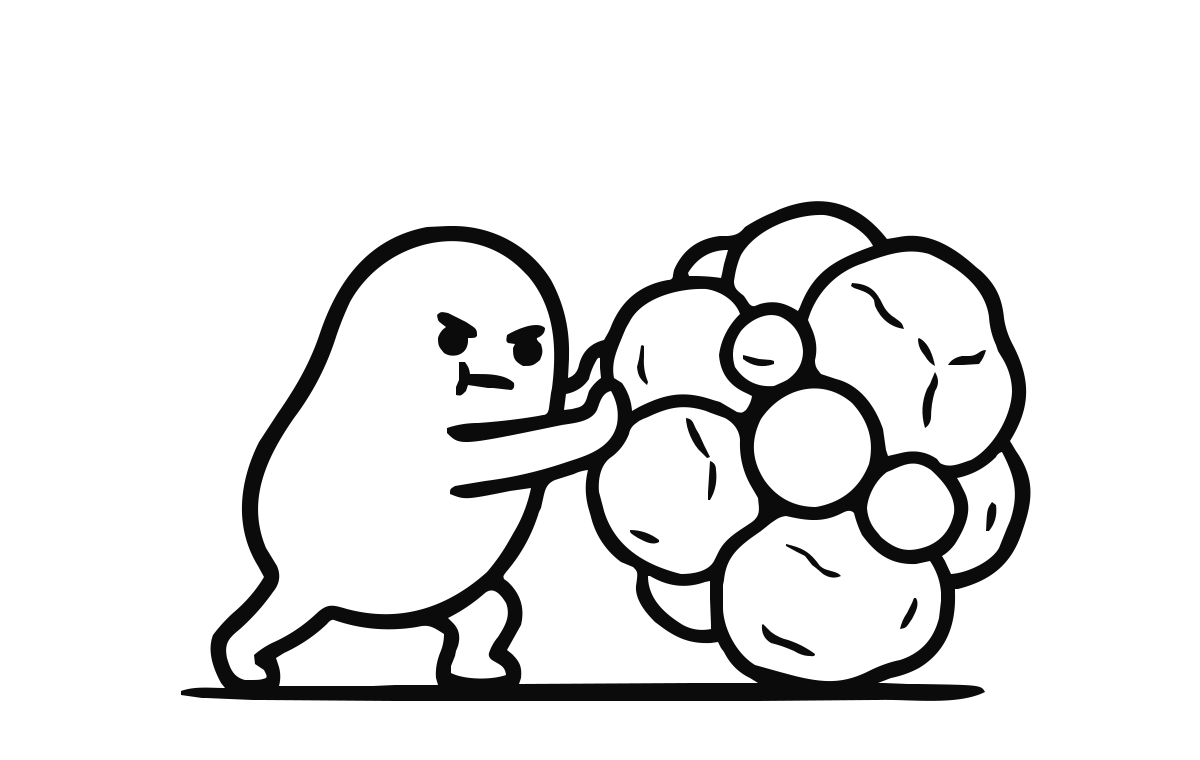
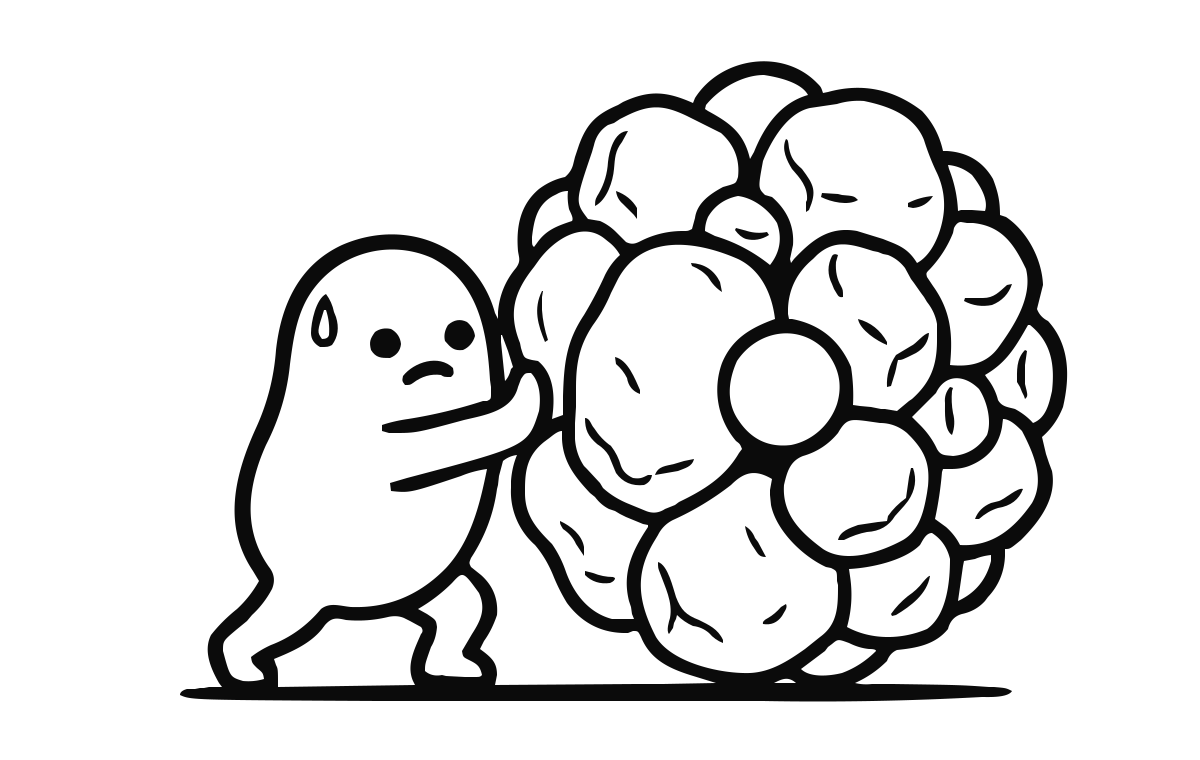
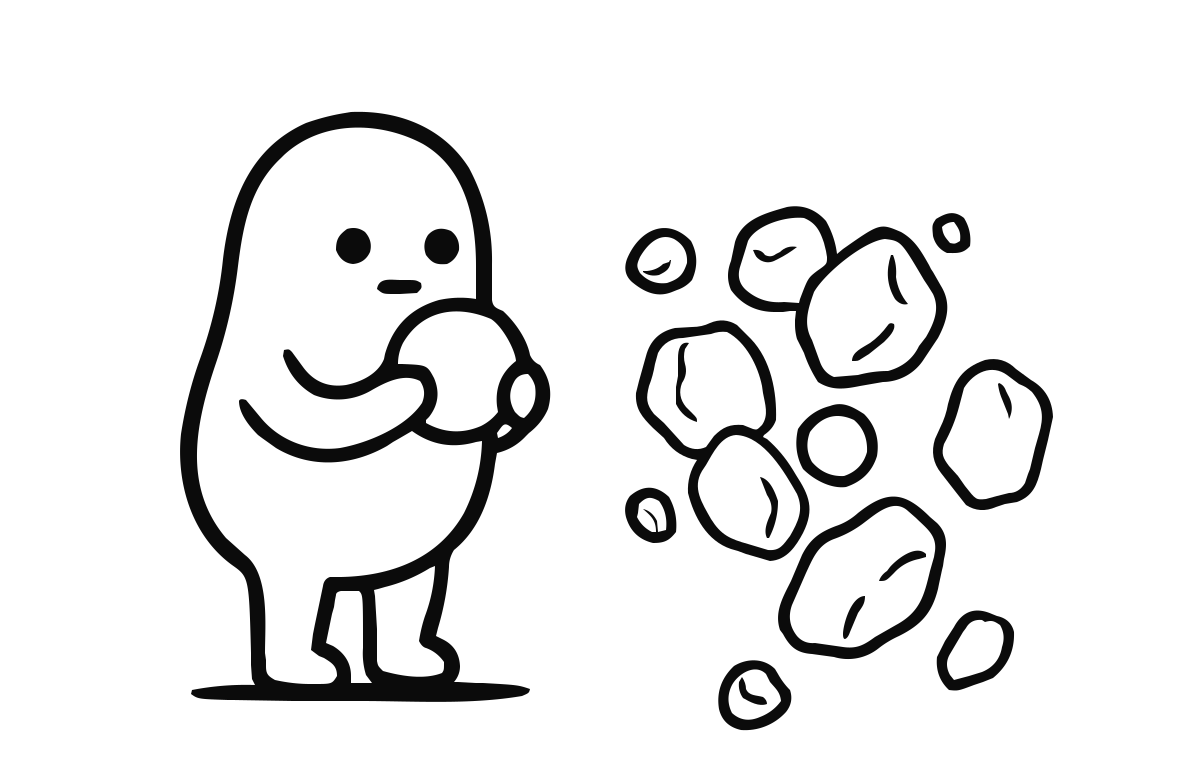
None of this means beliefs are fixed. The same science that explains their stubbornness explains their movement. Beliefs shift across a lifetime as experience contradicts them, and they can shift deliberately: when an old conclusion is brought to mind and met with a lived experience that contradicts it, at the level it was written, the original learning itself can update (Ecker, Ticic and Hulley, Unlocking the Emotional Brain, 2012). That is the mechanism we unpacked in the reconsolidation piece, and it is worth saying plainly what it implies: your mind was never built to keep old conclusions forever. It was built to update them, given the right kind of evidence. The system is not broken. It has just been waiting for input in the right language.
Challenging your own takes work, and it is worth it
Here is the honest part. Questioning a belief that has organised your life takes more than noticing it, because the belief will defend itself with everything in its folder, and because some part of you took it on for protection and is not careless about letting go. This is real work, and it is chosen work: nobody can do the questioning for you, and nobody can choose your changing on your behalf. But people who do it tend to describe the same arc. First the belief looks like the world. Then it looks like a belief. And then, once it updates, the world itself looks different, because the editor changed.
In a neurocoaching session that is exactly the arc we guide, gently and at your own pace: the belief found, the evidence honoured, and the update made where the conclusion actually lives. Your own mind does the finding, which is why what it releases tends to stay released.
Where this leaves you
So, where do your beliefs come from? From experience: much of it early, some of it recent, all of it real. And the heaviest ones usually trace back furthest, to a younger you doing their best with the evidence they had. Hold that with some tenderness, because so many of the limiting beliefs we carry began as somebody trying to stay safe.
And take something with you for right now, because you have already done more than read. The moment a belief stops looking like the world and starts looking like a belief, something real has happened: a choice exists where there was not one before. Simply becoming aware is progress. Simply questioning is progress. And choice is power: while a belief runs as fact it decides for you, and the instant you can see it, you get to decide what is best for you. That alone is movement, and it is yours tonight, without anyone's help.
Then, when you want the deeper movement, we will be plain about what we do here, because it is exactly this. In a session, this work begins to move beliefs at the level they were written, and people often feel it within the hour: the perception shifts, and the same world arrives from a new angle. When a belief runs especially deep, or sits inside a larger structure of them, one-to-one work simply gives it more room. The complimentary mini course is the gentle first look.
References
Beck, A. T. (1976). Cognitive Therapy and the Emotional Disorders. International Universities Press. · Nickerson, R. S. (1998). Confirmation bias: a ubiquitous phenomenon in many guises. Review of General Psychology, 2(2). · Clark, A. (2013). Whatever next? Predictive brains, situated agents, and the future of cognitive science. Behavioral and Brain Sciences, 36(3). · Ecker, B., Ticic, R. and Hulley, L. (2012). Unlocking the Emotional Brain. Routledge.